Peaberry Scary: A Color Font That Brings Halloween Whimsy to Your Designs
There's a moment in every designer's workflow when a project calls for something beyond standard typography—something with personality, texture, and a sense of playfulness that flat, monochrome fonts simply can't deliver. If you've ever stared at a Halloween-themed invitation, a seasonal social media campaign, or a festive product label and wished your typeface could do more than just sit there in black, you know exactly what I'm talking about. That's where color fonts step in, and Peaberry Scary is one that deserves a closer look.
What Makes This Typeface Stand Out
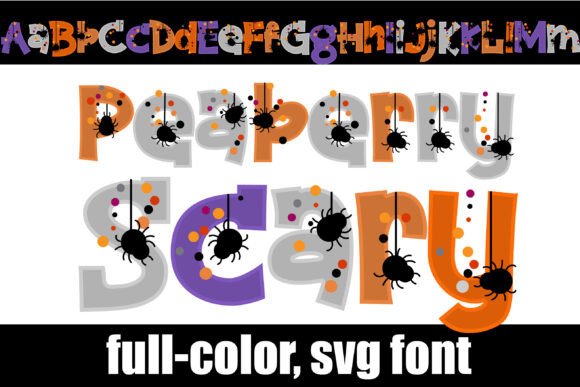
Peaberry Scary is a full-color SVG font built around a whimsical, hand-lettered aesthetic. The letterforms themselves have a bouncy, slightly irregular quality—the kind of shapes that feel hand-drawn rather than mechanically plotted on a grid. Each character is rendered in a Halloween-inspired color palette: think deep purples, vivid oranges, eerie greens, and inky blacks. But the real charm lives in the details. Tiny confetti pieces scatter across the letter strokes, and small spider motifs weave into the design, giving every word you set with this font an instant festive energy.
What's particularly useful is the included alt version. By accessing your system's character map, you can unlock additional color variations for every letter. This means you're not locked into a single look—you can mix and match alternate characters to create more dynamic, less repetitive compositions. For anyone designing a headline where every letter is visible, that kind of flexibility matters more than you might think.
Where This Font Actually Works Best
Color fonts like Peaberry Scary aren't designed for body copy or lengthy paragraphs. They're display typefaces, built for moments where a few words need to carry enormous visual weight. Think about the projects where typography is the star of the show rather than a supporting player.
For logo design, this font can serve as the foundation for a seasonal brand refresh. A bakery running a Halloween promotion, a boutique launching October merchandise, or a children's event company branding a fall festival could use Peaberry Scary as the logotype and build the rest of their visual identity around its palette. The built-in color scheme actually simplifies brand decisions—instead of agonizing over which shades of orange and purple to pair, the font has already made those choices for you in a cohesive way.
Packaging design is another natural fit. Limited-edition product labels, candy wrappers, treat bags, and party favor tags all benefit from type that feels celebratory and thematic without requiring custom illustration. Set your product name in Peaberry Scary, add a simple tagline in a clean sans serif, and you have a professional-looking package in minutes.
On social media, where you have roughly two seconds to stop someone from scrolling, a color font does the heavy lifting that a plain black typeface simply cannot. Instagram stories, Pinterest pins, Facebook event headers, and TikTok text overlays all become more eye-catching when the letters themselves are textured and colorful. For seasonal campaigns—especially around Halloween—this kind of visual immediacy translates directly into engagement.
Poster and flyer design is perhaps the most obvious application. Event posters for haunted houses, costume parties, school carnivals, and fall markets need typography that communicates the mood instantly. Peaberry Scary delivers that Halloween energy in a way that feels playful rather than threatening, which makes it especially appropriate for family-friendly events or brands that lean into the fun side of the holiday.
For merchandise, consider t-shirts, tote bags, stickers, and mugs aimed at the Halloween market. The confetti and spider details give the font enough visual interest to stand on its own without additional graphics, which can simplify production and reduce design costs.
Working With Color Fonts: Practical Considerations
Here's the reality check that every designer needs before committing to a color font: compatibility is not universal. Peaberry Scary is an OpenType full-color SVG font, which means it carries embedded color and texture data that standard fonts don't have. In programs that support this technology—Adobe Illustrator, Photoshop, InDesign, Silhouette Studio, Quark, and Inkscape among them—you'll see the letters in their full, colorful glory. In programs that don't support color fonts, the text will render in solid black. The whimsical shapes will still be there, but you'll lose the confetti, the spiders, and the Halloween palette.
This isn't a flaw in the font—it's a limitation of older or simpler software. Many programs that do support color fonts will still show them as black in the font preview window. The real test is typing directly into your document. If the colors appear on the canvas, your software is compatible.
Installation follows the same process as any standard .otf font. On Mac, FontBook handles it. On Windows, your preferred font manager or the Control Panel will do the job. No special plugins, no additional software, no complicated setup.
Pairing and Readability
Because Peaberry Scary is a display font with a strong personality, pairing it thoughtfully is essential. You wouldn't set an entire poster in this typeface—the confetti details and irregular letterforms would become visually noisy at scale. Instead, use it for your headline or hero text and pair it with something grounded for secondary information.
A clean sans serif font like Montserrat, Poppins, or even a simple grotesque like Helvetica works well for body copy, event details, pricing, and calls to action. If your project leans more editorial or elegant, a serif font like Playfair Display or Lora can create an interesting contrast between whimsical and refined. The key is balance: let Peaberry Scary do the talking, and give everything else a supporting role that doesn't compete.
Test your pairings at the actual size they'll appear. A font that looks great on your 27-inch monitor might be illegible on a phone screen or a small product label. Readability always wins over aesthetics when the two conflict.
Licensing and Commercial Use
Before using any font in a commercial project, verify the licensing terms. Most premium fonts come with a license that covers specific use cases—some charge per user, some per project, and some offer unlimited commercial use. Read the fine print, especially if you're designing for clients, selling merchandise, or distributing digital products that embed the font. The investment in proper licensing protects both you and the type designer who created the work.
Why It Matters for Your Brand
Typography is one of the fastest ways to communicate tone. A single typeface choice can signal playfulness, sophistication, urgency, or nostalgia—and Peaberry Scary signals festive fun with a handmade sensibility. For seasonal branding, that kind of instant emotional recognition is invaluable. It tells your audience what to expect before they read a single word of your copy.
If your brand or project lives in the Halloween, party, or craft space, having a font like this in your toolkit means you can produce seasonal assets quickly without sacrificing quality. And with the alternate characters available through your system's character map, you can keep your designs feeling fresh across multiple pieces without relying on the same exact letterforms every time.
Good design isn't about having the most tools—it's about having the right ones. When a project calls for Halloween whimsy that actually looks intentional and polished, Peaberry Scary earns its place in the rotation.